If your vehicle is already overheating, losing power, showing a tire problem, or struggling electrically in West Palm Beach traffic, move out of active travel lanes if the vehicle can still be controlled, turn on the hazard lights, and request towing help. Do not keep driving solely to reach a more convenient destination. During holiday congestion or summer heat, a minor warning can become an unsafe roadside stop.
Before the problem: build a Palm Beach seasonal departure check
Holiday trips create longer periods in traffic, while Palm Beach summer conditions can combine intense heat with sudden heavy rain. Prepare for both before loading passengers or luggage. The goal is not a full mechanical service at the curb; it is to spot reasons a vehicle should not begin the trip and to make a breakdown easier to manage.
Use this pre-departure checklist
- Fuel: Start with enough fuel for congestion, detours, and time spent idling. Do not plan around reaching the final available station.
- Battery readiness: Treat slow starting, flickering lights, or repeated starting trouble as warning signs. Arrange assistance before joining peak travel traffic.
- Tires: Look for visibly low pressure, sidewall damage, embedded objects, or unusually worn tread. Check the spare only if your vehicle has one.
- Cooling warnings: Confirm that no temperature warning is present. Steam, an unusual hot odor, or a rising temperature display calls for professional evaluation rather than a holiday test drive.
- Visibility: Check that the windshield is clear and the wipers and exterior lights operate before summer rain reduces visibility.
- Occupant supplies: Carry drinking water, necessary medication, phone charging equipment, and sun protection. Keep them accessible instead of buried under luggage.
- Towing details: Know the vehicle year, make, model, drivetrain if known, and intended destination. Save access to 24-hour towing assistance before departure.
Plan for congestion without creating a roadside emergency
Leave a time buffer so a warning light or worsening weather does not pressure you to continue. Share the route and expected arrival with someone who is not in the vehicle. Charge the driver’s phone and identify a backup route before moving; do not make route changes while driving.
Loading also matters. Keep the hazard triangle or other visibility equipment reachable, and do not stack luggage where it blocks rear visibility. If the vehicle will begin the trip in a parking garage, record the level, section, entrance clearance, and whether there is room near the vehicle. Those details affect what towing equipment can reach it.
At the roadside: make the stop fit the actual hazard
First decide whether the vehicle can move only far enough to leave a live lane. A high-temperature warning, steam, severe vibration, a visibly failing tire, sudden loss of power, or a strong burning odor are reasons to stop rather than continue across West Palm Beach or Palm Beach County.
- Choose control over convenience. A nearby parking lot may be preferable, but do not cross multiple busy lanes or force a damaged vehicle farther than necessary.
- Position carefully. Stop on firm ground with the wheels straight when possible. Avoid deep water, soft shoulders, and locations where the tow truck would have no working space.
- Protect occupants. If leaving the vehicle would put anyone near moving traffic, remain belted inside unless smoke, fire, flooding, or another immediate threat makes that unsafe. If everyone can exit safely, use the side away from traffic.
- Do not investigate hot components. Never open a hot cooling-system cap. Tell the towing dispatcher about the warning, steam, odor, and how long the vehicle was driven after the warning appeared.
Call emergency towing help when the vehicle cannot safely continue, is exposed to traffic, cannot steer or roll normally, has serious tire damage, or has overheated. A jump or other roadside action may be inappropriate when the cause is unclear or the symptom returns.
While waiting: manage heat, rain, and changing access
Give the dispatcher a location someone unfamiliar with the area can find: direction of travel, nearest visible cross street or address, parking level, gate instructions, and a description of the vehicle. A phone location pin can help, but it should supplement rather than replace those details.
- Conserve phone power and keep the line available for driver updates.
- Drink water in small amounts and monitor children, older adults, and anyone sensitive to heat.
- Do not keep an overheating or mechanically uncertain vehicle running just to operate the air conditioning.
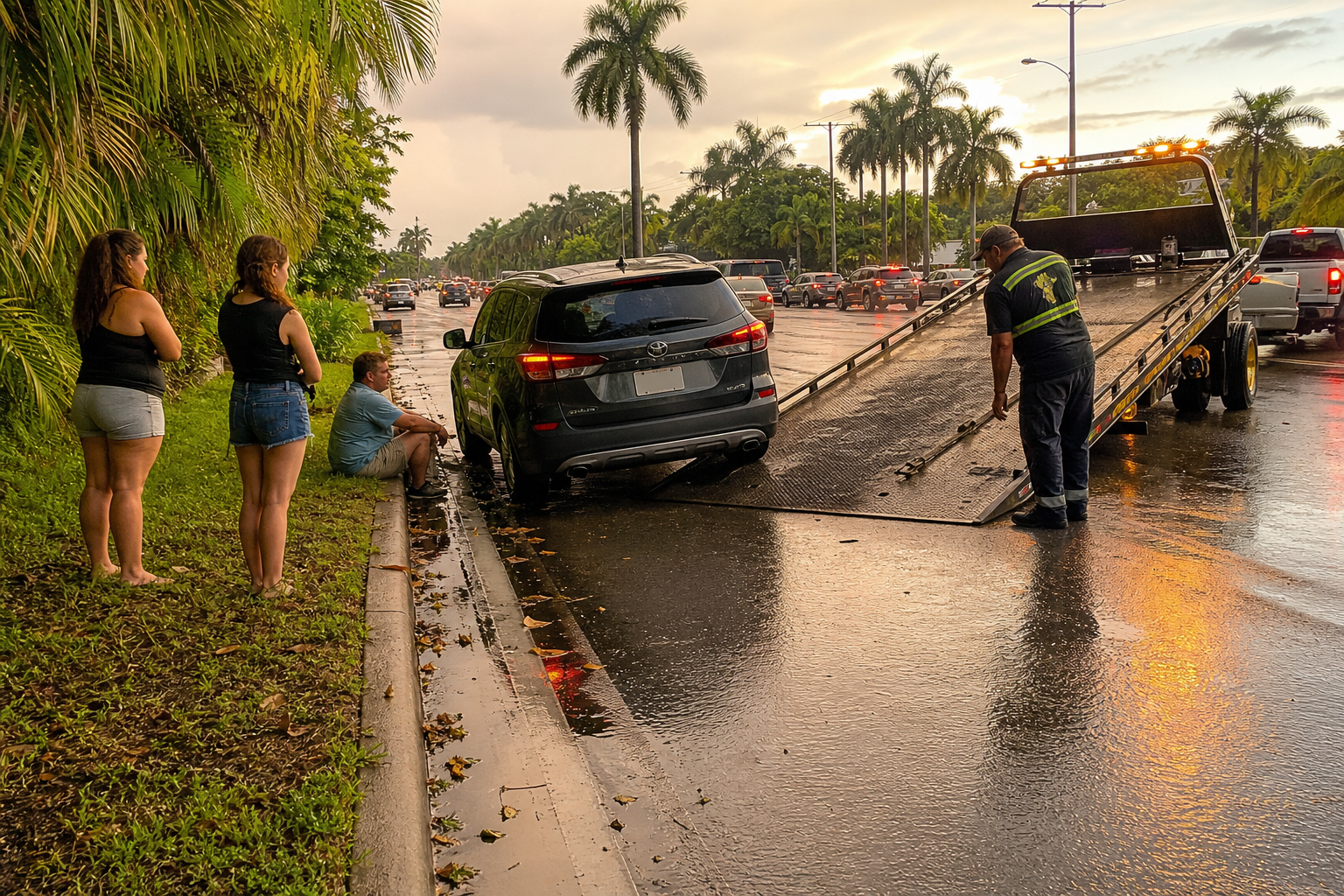
- During heavy rain, stay in the safest available shelter and advise the dispatcher if water is rising or visibility has changed.
- Do not stand behind the disabled vehicle or attempt to direct approaching traffic.
- Update the towing provider if the vehicle is moved, a gate closes, or garage access changes.
Peak holiday demand and severe weather can affect service availability. Do not interpret a wait estimate as permission to remain in a hazardous position. Report immediately if conditions deteriorate.
After service arrives: make the handoff specific
Confirm that the arriving operator has your name, vehicle description, and requested destination. Then describe what happened in order: the first warning, any sound or odor, whether power was lost, and whether the vehicle still steers, rolls, or shifts into neutral.
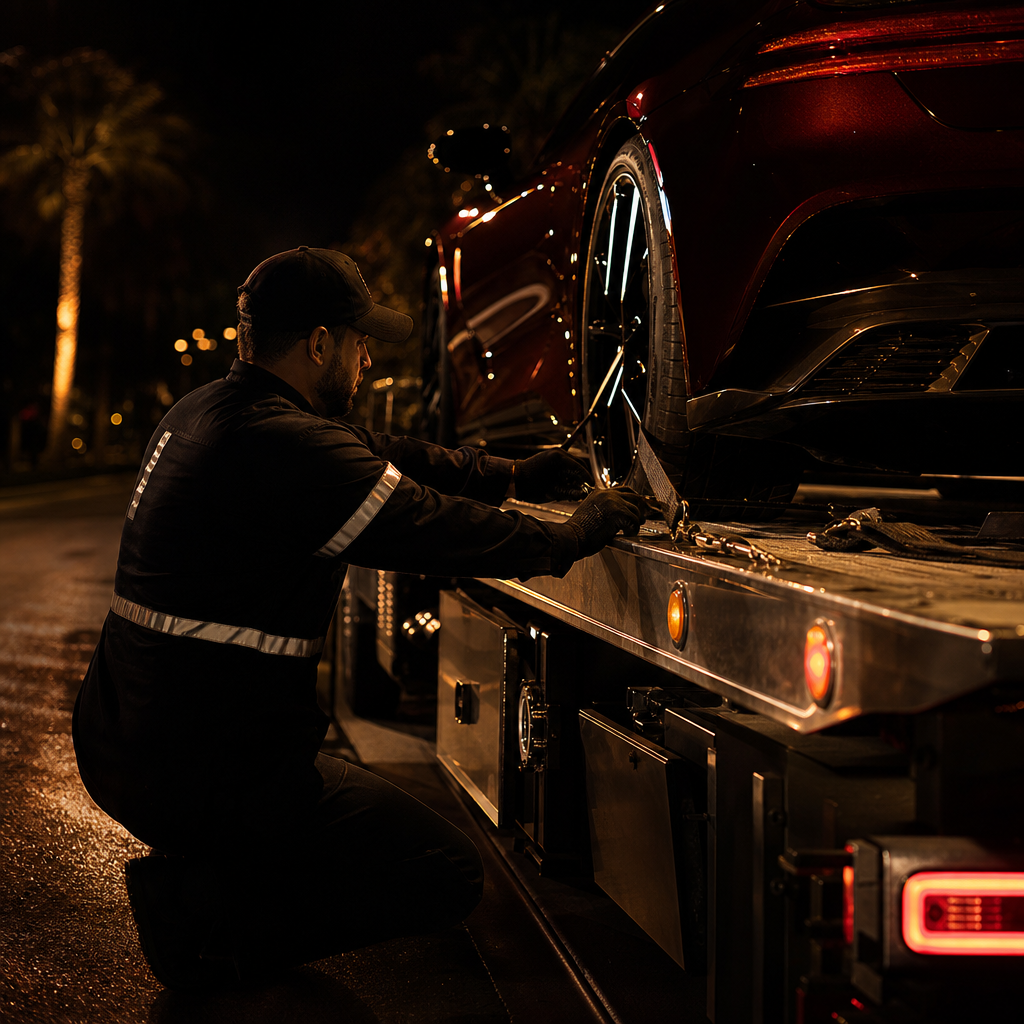
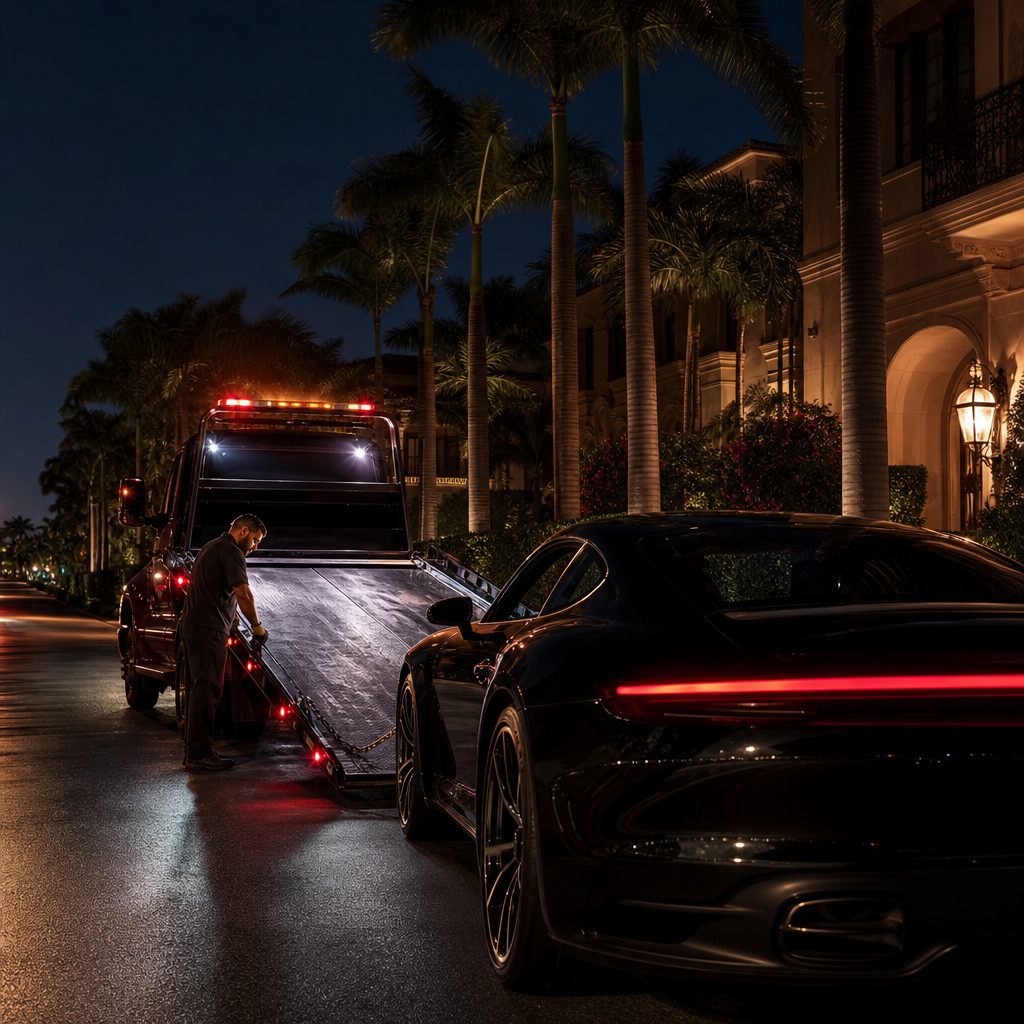
Tell the operator about low ground clearance, all-wheel drive if known, tire or suspension damage, leaking fluid, and any loading obstruction. A flatbed towing service may be selected for vehicles that should not roll on the roadway, but the operator must assess the vehicle, surface, and available loading space.
Garage recoveries require extra detail. Provide the clearance, level, ramp layout, stall position, and exit restrictions. Do not attempt to push a disabled vehicle down a ramp or into an active lane to simplify access. The towing provider can determine whether different equipment or a safer transfer point is needed.
Before departure, remove essential medication and valuables, confirm the destination, and photograph the vehicle’s visible condition if it is safe to do so.
Be information-ready when you call
Have the vehicle year, make, model, color, exact location, symptoms, passenger needs, access restrictions, and preferred destination ready. Clear information helps the towing provider choose suitable equipment without relying on guesses.
Seasonal roadside FAQs
Should I keep driving if the temperature warning appears in holiday traffic?
No. Reduce speed, avoid abrupt maneuvers, and stop safely as soon as practical. Continuing can leave the vehicle disabled in a more exposed location. Report the warning when requesting towing.
Can I wait inside an overheated vehicle with the air conditioning running?
Do not keep a vehicle running when overheating or another serious mechanical warning is present. Choose the safest available waiting location and tell the dispatcher if heat creates an urgent occupant concern.
What should I report after a tire problem in heavy rain?
Report the tire position, whether it is flat or visibly damaged, whether the vehicle is on firm ground, surrounding traffic exposure, and current visibility. Do not change a tire where passing traffic creates a hazard.
What information is needed for a parking-garage tow?
Provide the garage entrance clearance, level, section or stall, ramp restrictions, gate access, and whether the vehicle can steer, roll, and enter neutral. This helps the provider assess constrained access before arrival.